
What Polish strawberries have to do with honouring my roots
Strawberries
This topic came back to me when I started planning a visit ‘back home’ this year and some of my old worries and emotions resurfaced.
But I also had a very important mission — to bring Polish strawberries back with me. They are the one food I truly miss and firmly believe are the best in Poland. If you’ve never tasted them, don’t even try to argue with me. And once you do, you’ll be asking me every year if I’m going to Poland for a new batch. I promise you. True story — you can ask my neighbours. 😉
Constellations of immigration
If I still miss food from ‘back home’ but am settling in a new country — am I an immigrant or still an expat?
I came across a definition of expat versus immigrant somewhere online, and it made me think about my place in the new culture I have chosen to integrate into and live in.
For a very long time I didn’t feel I belonged.
Not because I wasn’t welcome — everyone greeted me with open arms, trying to help and give me a place in their lives.
And still I felt like I didn’t belong. The feeling was mine and mine alone. Because there were a few factors at play that I only came to understand much later, after I immersed myself in systemic work and family constellations.
I understand it a bit better now. Which doesn’t mean my dilemmas have been fully ‘solved’ — it is a process and it doesn’t happen overnight. At the same time, I do feel a shift that has happened in me, one that immediately had an effect on the dynamics around me and within groups. But I needed the ground to shift beneath my feet a little before that movement could happen.
My roots
‘Putting down roots’ is a common expression in my mother tongue for settling somewhere with the intention of staying. But I never thought about it in the context of moving and settling abroad.
I thought I was already putting down roots about sixteen years ago, back in Poland. I had bought a small flat in a place I’d had my eye on for a while — but then life happened and I ended up moving abroad.
I have moved more than twenty times in my life and stopped counting. Some moves were within the same country, others further away, some temporary, others with the intention of staying. But only this time — with an actual feeling of ‘putting down my roots’ — did I experience it so much more deeply, and quite turbulently.
I was completely blindsided by the impact moving to the Netherlands had on me.
I didn’t expect the struggle that hit me hard, despite the great support network I had around me. The context became so much more complex, and I didn’t allow myself time to absorb it gradually — I jumped straight into the new culture. I think I forgot to check in with myself in the process. A new job within two weeks of arriving, setting up a home, maintaining routines and activities, learning a new language, getting to know new people, trying to get my career back on track, navigating daily life, the obligations of being a citizen — even things like finding a dentist or a doctor. All of it required some adjustment, even if just a small one.
Almost everything worked slightly differently from what I had known before. And despite my best efforts to assimilate, I didn’t feel like I belonged.
A couple of personal situations made life feel like it was crumbling around me — and with it, my confidence, resilience and health.
Looking back, I think a big part of it was the experience of pulling up roots in one place and trying to replant them elsewhere as they were. But just like with plants, it’s not that simple. The new soil has different qualities, the weather is different. And then there’s the question of what you take with you — and what you leave behind.
Honouring one’s roots
I know now how the systems we belong to work. In some we have a fixed place, in others it is only temporary. We have a fixed place in our family system, for instance, while in organisations it might look quite different.
Among the unspoken laws that govern a system is the principle of Belonging — the idea that everyone has an equal right to belong. The system will even work towards restoring any imbalances, in what some describe as mysterious ways. It’s not a mystery once you become aware of the mechanics of it, though.
My immigration had apparently disturbed some of those dynamics — mostly for me, in the form of feeling torn, struggling with divided loyalty. Almost like a kind of survivor’s guilt: the sense that thriving somewhere else means leaving others behind.
I truly felt suspended between two worlds. Not yet ready to let go, but not quite settled either.
So what’s the solution? And you might be surprised — because it is simpler than you’d think, although definitely not easy.
The key is in honouring your roots. What that looks like will be different for everyone. In broad terms, it’s about embracing a bicultural identity. Of course you will feel different from your ‘other self’ — but once you learn to accept and integrate all the elements, that’s where something shifts. Nobody asks you to leave anything behind or to force yourself to fit at all costs.
We do need to be realistic — things change and we need to learn the new culture. But we get to decide which important parts of ourselves we carry forward. Not denying our roots, but embracing them, integrating them and taking our own place.
And yes, there will be parts you grieve or need to let go of — there’s only so much room in the trunk. But you decide what you keep and what you lovingly leave behind — not hide, but proudly acknowledge.
That said, it’s not a magic pill. It offers a new perspective and normalises the complexity and ambiguity of the situation — but it may not suddenly free you from the feelings and thoughts that still surface.
Resilience
I found systemic work deeply illuminating — it offered perspectives I had never encountered before. Some practitioners even work with it to heal old generational wounds and trauma.
At the same time, it didn’t give me closure — though I wasn’t expecting it to. Instead, I found something else: Acceptance and Commitment Therapy, which gives me tools to work with whatever life throws my way.
There will always be something we struggle with — that’s simply the nature of life. But we can choose how we meet it. And with the right tools — practiced consistently — we can get better at living the lives we want to live.
Emigration, which is often not a free choice, can carry a heavy mental burden. Depending on the circumstances in which we leave our home country, we may feel quite alone before we manage to build something new. And any significant migration, regardless of circumstances, brings stress that can lead to anxiety and depression.
That’s why learning to work with the demands of a complex, stressful life — whatever form that takes — can make such a difference.
The mental strength that comes from this kind of work is essentially what ACT teaches: psychological flexibility. And it is that flexibility which, over time, gives us a little more freedom in how we respond — to life’s challenges, and to life itself.
For me, that flexibility means I don’t get (too quickly) derailed by setbacks or other people’s opinions.
And it remains a process — if I want to strengthen it, I have to keep practicing it too.
If you’d like to know what could help you build these skills — reach out.
Till next time.
Stay rooted,
Dominika
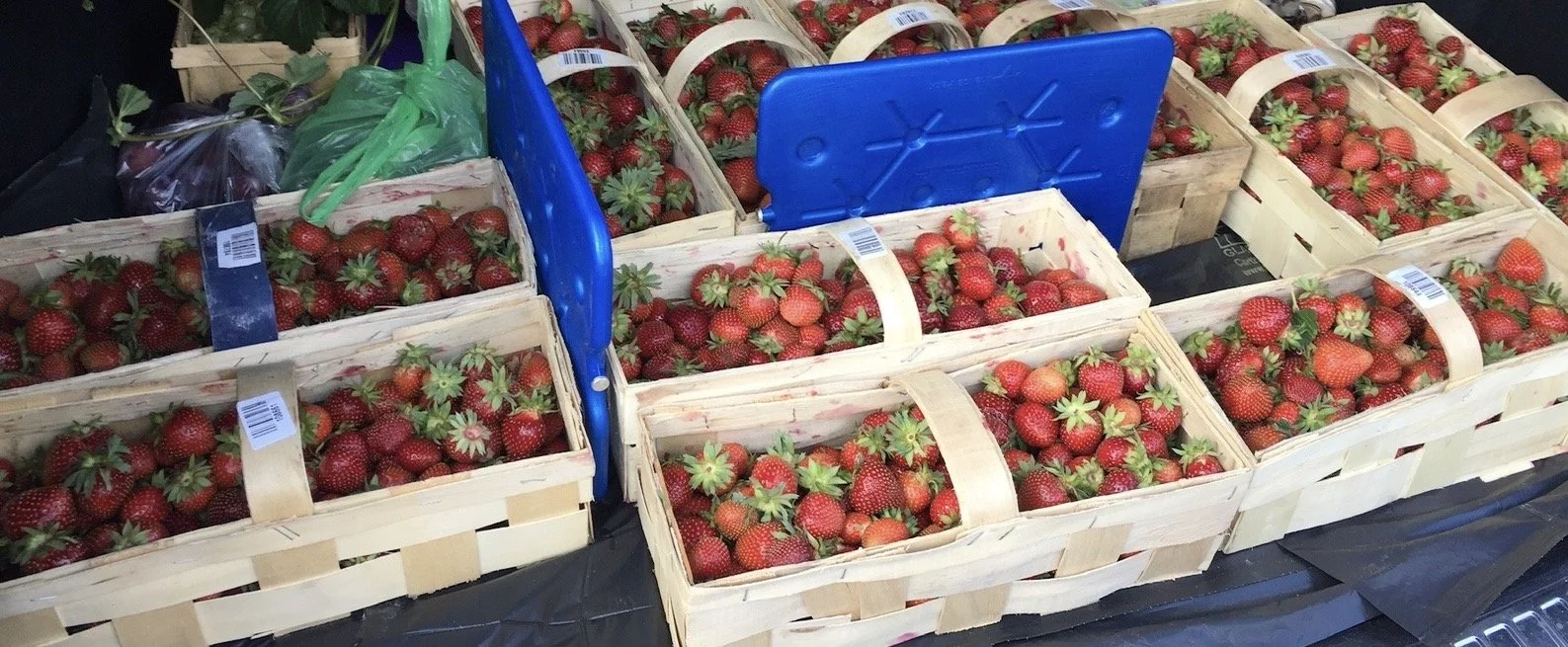
A strawberry haul from Poland — almost 25 kilos — no regrets.